
Colon Cancer
Advanced treatment for colon cancer including surgery, chemotherapy, targeted therapy, and immunotherapy based on stage and molecular markers.
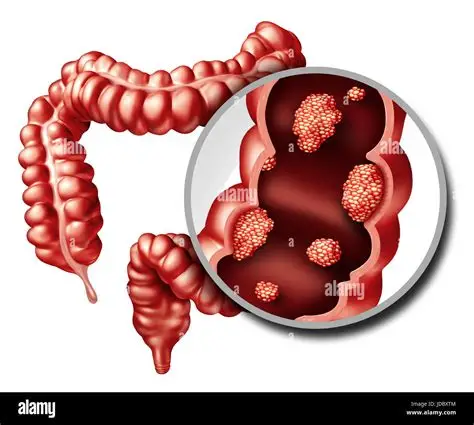
Colon Cancer
Solid Tumors
Overview
Colon cancer treatment depends on stage, location, and molecular characteristics. Early-stage cancers may be cured with surgery alone, while advanced stages require multimodal therapy including surgery, chemotherapy, targeted therapy, and immunotherapy.
When to Consult
After colonoscopy findings, positive fecal occult blood test, changes in bowel habits, rectal bleeding, or confirmed colon cancer diagnosis.
What to Bring
Colonoscopy reports, biopsy results, CT scans, CEA blood test results, MSI/MMR testing results, RAS/BRAF mutation testing, and family history of colorectal cancer.
Risk Factors
Causes
Treatment Options
Colectomy
Surgical removal of the tumor and surrounding colon tissue. Options include hemicolectomy (right or left), sigmoid colectomy, or total colectomy. May include lymph node dissection. Laparoscopic or robotic techniques available.
Neoadjuvant Chemotherapy
Chemotherapy before surgery to shrink tumors, particularly for locally advanced disease. Common regimens include FOLFOX (5-FU, leucovorin, oxaliplatin) or FOLFIRI (5-FU, leucovorin, irinotecan).
Adjuvant Chemotherapy
Post-surgical chemotherapy to eliminate remaining cancer cells and reduce recurrence risk. Typically recommended for stage III and high-risk stage II colon cancer. Duration usually 6 months.
Targeted Therapy
Bevacizumab (anti-VEGF) or cetuximab/panitumumab (anti-EGFR) for advanced disease. Based on RAS/BRAF mutation status. EGFR inhibitors only for RAS wild-type tumors.
Immunotherapy
Pembrolizumab or nivolumab for MSI-high or dMMR colon cancer. Highly effective for this subset. May be used in first-line or later-line treatment.
Radiation Therapy
Rarely used for colon cancer but may be considered for locally advanced rectal cancer or palliative care for metastases.
Metastasectomy
Surgical removal of liver or lung metastases when feasible. May be combined with chemotherapy for optimal outcomes.
Ablation Therapy
Radiofrequency or microwave ablation for liver metastases that cannot be surgically removed.