
Colon Cancer
Advanced treatment for colon cancer including surgery, chemotherapy, targeted therapy, and immunotherapy based on stage and molecular markers.
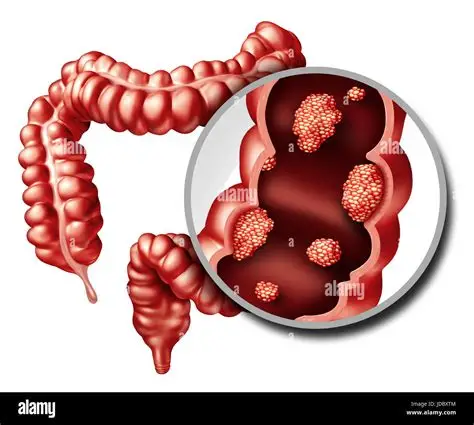
Colon Cancer
Solid Tumors
Overview
Colon cancer is a major gastrointestinal malignancy arising from the inner lining of the large intestine (colon), which represents the final portion of the digestive tract. The majority of colon cancers develop from benign adenomatous polyps that undergo a series of genetic mutations over a period of 10 to 15 years, a process known as the adenoma-carcinoma sequence. Colon cancer is histologically classified as adenocarcinoma in more than 95% of cases.
The tumor can grow locally, invading through the bowel wall layers (mucosa, submucosa, muscularis propria, and serosa), and spread to regional lymph nodes and distant organs. The liver is the most common site of distant metastasis due to the portal venous drainage system, followed by the lungs, peritoneum, and bones. Early-stage colon cancer is often asymptomatic, which underscores the importance of screening.
When symptoms occur, they depend on the tumor's location. Right-sided colon cancers typically present with chronic blood loss leading to iron deficiency anemia, fatigue, weakness, and vague abdominal discomfort, as the stool is liquid in this part of the colon. Left-sided colon cancers often present with changes in bowel habits (constipation, diarrhea, narrowing of stool caliber), visible rectal bleeding, abdominal cramps, and bowel obstruction, as the stool is solid.
Systemic signs include unexplained weight loss and loss of appetite. Survival and treatment outcomes are highly dependent on the stage at diagnosis and molecular markers.
When to Consult
After colonoscopy findings, positive fecal occult blood test, changes in bowel habits, rectal bleeding, or confirmed colon cancer diagnosis.
What to Bring
Colonoscopy reports, biopsy results, CT scans, CEA blood test results, MSI/MMR testing results, RAS/BRAF mutation testing, and family history of colorectal cancer.
Risk Factors
Causes
Treatment Options
Surgical Resection (Colectomy)
Surgery is the primary curative treatment for non-metastatic colon cancer (Stages I-III). The procedure, known as a Colectomy or Hemicolectomy, involves removing the segment of the colon containing the tumor along with a wide margin of healthy tissue and its associated vascular supply and mesentery containing regional lymph nodes. At least 12 lymph nodes must be examined for accurate staging. For tumors in the cecum or ascending colon, a Right Colectomy is performed. For tumors in the descending or sigmoid colon, a Left Colectomy or Sigmoid Colectomy is executed. The remaining healthy ends of the colon are surgically joined together (anastomosis). Colectomies are routinely performed using minimally invasive laparoscopic or robotic techniques, which offer faster recovery, less pain, and shorter hospital stays compared to open laparotomy.
Adjuvant and Systemic Chemotherapy
Chemotherapy plays a critical role in reducing the risk of recurrence and managing advanced stages of colon cancer. For Stage III colon cancer (where lymph nodes are positive), adjuvant chemotherapy administered after surgery is the standard of care, typically for a duration of 3 to 6 months depending on risk stratification. Adjuvant chemotherapy is also considered for high-risk Stage II patients (with risk factors like poor differentiation, vascular invasion, or bowel obstruction). Standard chemotherapy regimens are platinum-based combinations, including FOLFOX (5-Fluorouracil, Leucovorin, and Oxaliplatin) or CAPOX (Capecitabine and Oxaliplatin). For advanced or metastatic (Stage IV) disease, systemic chemotherapy (including FOLFOX, FOLFIRI [5-FU/Leucovorin/Irinotecan], or FOLFOXIRI) is used to control tumor growth and prolong survival.
Monoclonal Antibodies and Targeted Therapy
Targeted therapies are combined with chemotherapy in the metastatic setting to block specific pathways involved in tumor growth and angiogenesis (blood vessel formation). Anti-VEGF therapies, such as Bevacizumab, Ramucirumab, and Ziv-aflibercept, target vascular endothelial growth factor to inhibit tumor blood supply. For patients whose tumors are RAS wild-type (meaning they have no mutations in KRAS or NRAS genes) and BRAF wild-type, anti-EGFR monoclonal antibodies like Cetuximab or Panitumumab are highly effective, particularly for left-sided primary tumors. In patients with the BRAF V600E mutation, the combination of Encorafenib (a BRAF inhibitor) and Cetuximab is used. Regorafenib (a multi-kinase inhibitor) and Trifluridine/Tipiracil are oral options for heavily pretreated advanced disease.
Cancer Immunotherapy
Immunotherapy has emerged as a highly effective, landmark treatment for a specific subset of colon cancer patients. Approximately 15% of early-stage and 4-5% of metastatic colon cancers exhibit Deficient Mismatch Repair (dMMR) or High Microsatellite Instability (MSI-H). These tumors have a high number of genetic mutations and are highly immunogenic. Immune checkpoint inhibitors targeting PD-1 (such as Pembrolizumab or Nivolumab) and CTLA-4 (such as Ipilimumab) are used as primary treatments for MSI-H/dMMR metastatic colon cancer. These therapies can achieve deep and extremely durable responses, sometimes leading to long-term remission, with a much better side effect profile than cytotoxic chemotherapy .
Locoregional and Ablative Therapies
For patients with oligometastatic disease (limited spread, typically confined to the liver or lungs), locoregional therapies can be curative or prolong survival. Surgical Metastasectomy involves the removal of liver or lung metastases when feasible, often in combination with perioperative chemotherapy . When surgery is not possible, ablative techniques like Radiofrequency Ablation (RFA) or Microwave Ablation (MWA) use heat to destroy tumor cells. Transarterial Chemoembolization (TACE) or Selective Internal Radiation Therapy (SIRT/Y-90) delivers chemotherapy or radioactive microspheres directly to liver tumors via the hepatic artery. Stereotactic Body Radiotherapy (SBRT) is also used to treat isolated metastatic lesions.
Frequently Asked Questions
Q. What is the most effective treatment for Colon Cancer?
The most effective treatment for Colon Cancer depends on the stage, location, molecular profile of the tumor, and the patient's overall health. Dr. R. Srinath Bharadwaj provides personalized protocols including chemotherapy , immunotherapy , targeted therapy , or combination approaches.
Q. Where can I get expert treatment for Colon Cancer in Hyderabad?
You can consult Dr. R. Srinath Bharadwaj, a leading Medical Oncologist, at the American Oncology Institute, Nallagandla, Hyderabad. Call +91 82476 51202 to schedule an appointment.
Q. What documents should I bring for a Colon Cancer consultation?
Please bring all recent biopsy reports, imaging scans (CT, MRI, or PET-CT), tumor markers, blood test results, and any previous treatment or surgery details to help outline your care plan.