Adrenal Cancer
Expert management of adrenal cancer including surgery (adrenalectomy), chemotherapy, targeted therapy, and hormone management.
Adrenal Cancer
Solid Tumors
Overview
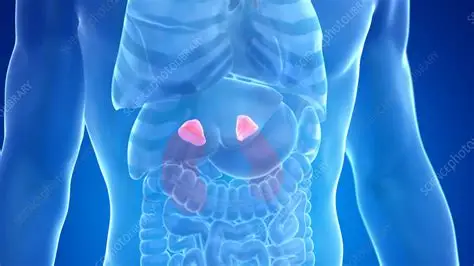
Adrenal cancer, specifically Adrenocortical Carcinoma (ACC), is an extremely rare and highly aggressive malignancy originating in the adrenal cortex—the outer layer of the adrenal glands, which are small, triangular glands situated on top of each kidney. The adrenal cortex is responsible for producing vital hormones, including cortisol (which regulates metabolism and stress response), aldosterone (which controls blood pressure and fluid balance), and sex hormones (androgens and estrogens). ACC can be functioning (hormone-secreting, about 60% of cases) or non-functioning (about 40%).
Functioning tumors present with symptoms of hormone excess. Cortisol excess leads to Cushing's syndrome, characterized by rapid weight gain, a rounded face ('moon face'), muscle weakness, thinning skin, purple stretch marks, hypertension, and hyperglycemia. Excess androgen production causes virilization in women (excessive facial hair, voice deepening, irregular periods).
Excess aldosterone causes hypertension and hypokalemia (low potassium). Non-functioning tumors are silent until they grow large enough to cause abdominal fullness, flank pain, or early satiety by compressing adjacent organs. ACC has a high rate of local recurrence and a strong propensity to metastasize early to the liver, lungs, bones, and retroperitoneum.
Due to its rarity and complexity, management requires specialized multidisciplinary care.
When to Consult
Upon diagnosis of adrenal mass, hormonal abnormalities (Cushing's syndrome, Conn's syndrome, pheochromocytoma symptoms), or confirmed adrenal cancer diagnosis.
What to Bring
CT/MRI scans, hormone level tests (cortisol, aldosterone, catecholamines, metanephrines), biopsy reports, genetic testing results, and complete endocrine history.
Risk Factors
Causes
Treatment Options
Complete Surgical Adrenalectomy
Complete surgical resection (adrenalectomy) is the only curative treatment for localized and locally advanced adrenal cancer. The primary goal is to achieve an R0 resection (complete removal with negative margins) without rupturing the tumor capsule, as capsule rupture dramatically increases the risk of local recurrence. Open adrenalectomy is the gold standard approach, allowing for optimal visualization and wide clearance. The surgeon may remove adjacent organs (such as the kidney, spleen, or distal pancreas) if they are invaded by the tumor. Laparoscopic adrenalectomy is reserved for small (<6 cm), early-stage tumors without signs of local invasion, performed by experienced surgeons.
Adjuvant Mitotane Therapy
Mitotane is an oral drug that is selectively toxic to adrenal cortex cells, blocking steroid synthesis and destroying adrenal tissue. It is the standard adjuvant therapy following complete surgical resection for patients with a high risk of recurrence (large tumors, positive margins, or high proliferation index). Mitotane is also used as a primary systemic therapy for advanced or metastatic adrenal cancer. Because mitotane suppresses normal adrenal function, all patients taking it require lifelong glucocorticoid (and sometimes mineralocorticoid) replacement therapy. Mitotane levels must be monitored regularly in the blood to maintain a therapeutic range while avoiding severe neurological side effects.
EDP-Mitotane Combination Chemotherapy
For patients with advanced, unresectable, or metastatic adrenocortical carcinoma, systemic chemotherapy is combined with mitotane. The standard first-line regimen is the EDP-Mitotane protocol, which combines the chemotherapy drugs Etoposide, Doxorubicin, and Cisplatin (EDP) with oral Mitotane. This combination has been shown to achieve tumor response and control disease progression, although it is associated with significant side effects including myelosuppression, nausea, fatigue, and neurotoxicity. Second-line chemotherapy options include streptozocin or gemcitabine combined with capecitabine for patients whose disease progresses.
Medical Hormone Management
In patients with functioning adrenal tumors that secrete excess hormones, medical management of hormone production is crucial to control symptoms and improve quality of life. For patients with Cushing's syndrome (cortisol excess) who cannot undergo surgery or have residual disease, steroidogenesis inhibitors such as Ketoconazole, Metyrapone, or Osilodrostat are used to block the enzymatic pathways of cortisol synthesis. Mitotane also helps suppress hormone production. Spironolactone is used to treat hypokalemia and hypertension caused by aldosterone excess. These supportive therapies are adjusted based on regular hormone level monitoring.
Frequently Asked Questions
Q. What is the most effective treatment for Adrenal Cancer?
The most effective treatment for Adrenal Cancer depends on the stage, location, molecular profile of the tumor, and the patient's overall health. Dr. R. Srinath Bharadwaj provides personalized protocols including chemotherapy , immunotherapy , targeted therapy , or combination approaches.
Q. Where can I get expert treatment for Adrenal Cancer in Hyderabad?
You can consult Dr. R. Srinath Bharadwaj, a leading Medical Oncologist, at the American Oncology Institute, Nallagandla, Hyderabad. Call +91 82476 51202 to schedule an appointment.
Q. What documents should I bring for a Adrenal Cancer consultation?
Please bring all recent biopsy reports, imaging scans (CT, MRI, or PET-CT), tumor markers, blood test results, and any previous treatment or surgery details to help outline your care plan.